Hockey is a sport that ignites passion and excitement among players and fans alike. Its fast-paced nature and strategic depth make it a favorite across the globe. To truly appreciate the intricacies of hockey, it is vital to understand the rules and regulations that govern the game. This article provides a comprehensive exploration of hockey’s gameplay, scoring mechanisms, equipment requirements, penalties, and the roles of officials, allowing both newcomers and seasoned enthusiasts to deepen their knowledge of this beloved sport.
The Essence of Hockey Gameplay
At its core, hockey is a contest between two teams striving to outscore one another by getting a puck or ball into the opponent’s net. This fundamental objective remains consistent across different variations of the sport, including ice hockey and field hockey, yet the gameplay features distinct rules and formats.
In ice hockey, matches are divided into three periods, each lasting 20 minutes. The continuous action is often interrupted by stoppages for goals, penalties, or other infractions. This structure ensures that every second counts, creating an exhilarating viewing experience. Field hockey, on the other hand, typically consists of two halves of 35 minutes each, allowing for a slightly different flow of play and strategy. Regardless of the format, teamwork, communication, and skill are paramount to achieving success.
Dimensions of the Playing Area
Understanding the dimensions of the playing area is crucial for grasping the rules of hockey. Field hockey is played on a rectangular field measuring 100 yards long and 60 yards wide, with a circle or D at each end where scoring opportunities arise. Players can only score when the ball is struck within this area, making positioning and timing critical components of offensive play.
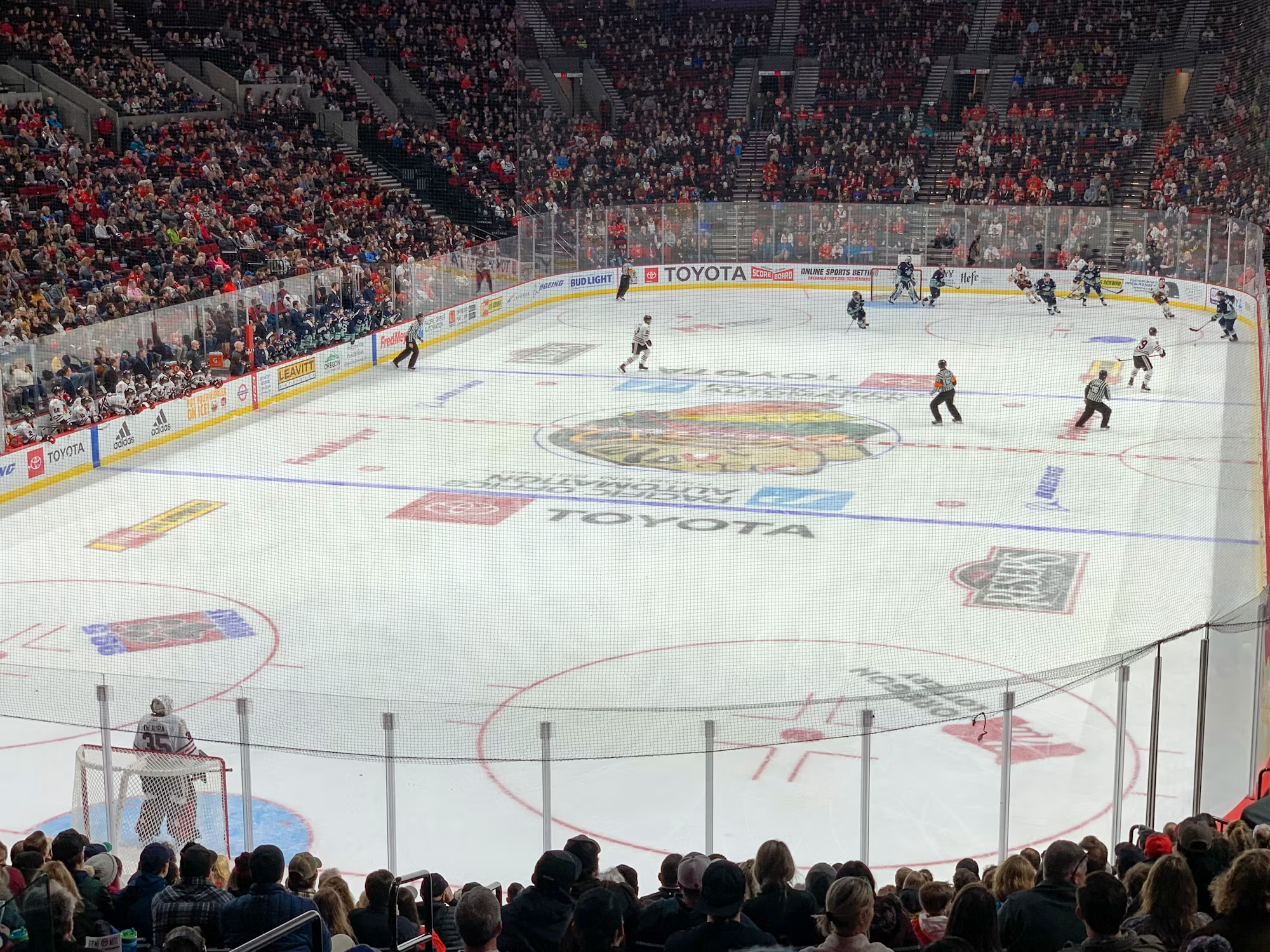
In contrast, ice hockey is played on a rink that measures 200 feet long and 85 feet wide. The rink is divided into several zones, including the offensive, defensive, and neutral zones, each playing a specific role in the flow of the game. The goal crease, a semi-circular area in front of the net, is reserved for the goaltender, who must defend against incoming shots. These dimensions significantly influence gameplay, as players must adapt their strategies to navigate the available space effectively.
Scoring in Hockey
Scoring is the primary goal in hockey, and understanding how goals are awarded is essential for players and fans. In ice hockey, a goal is scored when the puck completely crosses the goal line between the two posts. Players utilize a variety of techniques, such as slap shots, wrist shots, and dekes, to outmaneuver the goaltender and secure points for their team.
In field hockey, scoring is similar but comes with its own set of rules. A goal is counted when the ball is hit into the net from within the circle, requiring precision and teamwork to create effective scoring opportunities. Players employ dribbling, passing, and positioning strategies to maximize their chances of scoring, emphasizing the importance of collaboration and skill development.
Understanding Penalties and Infractions
Hockey is a physical sport, and while contact is an integral part of the game, certain actions can lead to penalties that may change the course of a match. Familiarity with these penalties is crucial for both players and spectators. In ice hockey, common infractions include tripping, slashing, and boarding. Depending on the severity of the foul, the offending player may receive a two-minute minor penalty or a five-minute major penalty. During a minor penalty, the player sits in the penalty box, leaving their team at a disadvantage, while a major penalty may provide the opposing team with an opportunity for a power play.
Field hockey also imposes rules to maintain fair play. Infractions like obstruction or dangerous play can result in free hits awarded to the opposing team. More severe violations can lead to penalty corners or penalty strokes, which provide direct scoring opportunities. Understanding how to navigate these situations is essential for players, as discipline can often be the difference between victory and defeat.
Equipment Essentials
The equipment used in hockey varies significantly between ice and field hockey, with each type requiring specific gear to ensure safety and performance. In ice hockey, players are equipped with helmets, shoulder pads, elbow pads, and shin guards to protect against impacts. Skates are crucial for mobility on the ice, while sticks are designed for handling the puck with precision. Goaltenders wear additional protective equipment, including specialized masks and pads, to safeguard against high-speed shots from opposing players.
In field hockey, players wear less protective gear, typically including shin guards and mouthguards. The sticks, made of wood or composite materials, are designed for ball control and striking accuracy. Goaltenders in field hockey also have specialized gear, including helmets and padded clothing, to protect them from powerful shots. The choice and quality of equipment can significantly influence a player’s performance and safety on the field or rink.
The Role of Officials in the Game
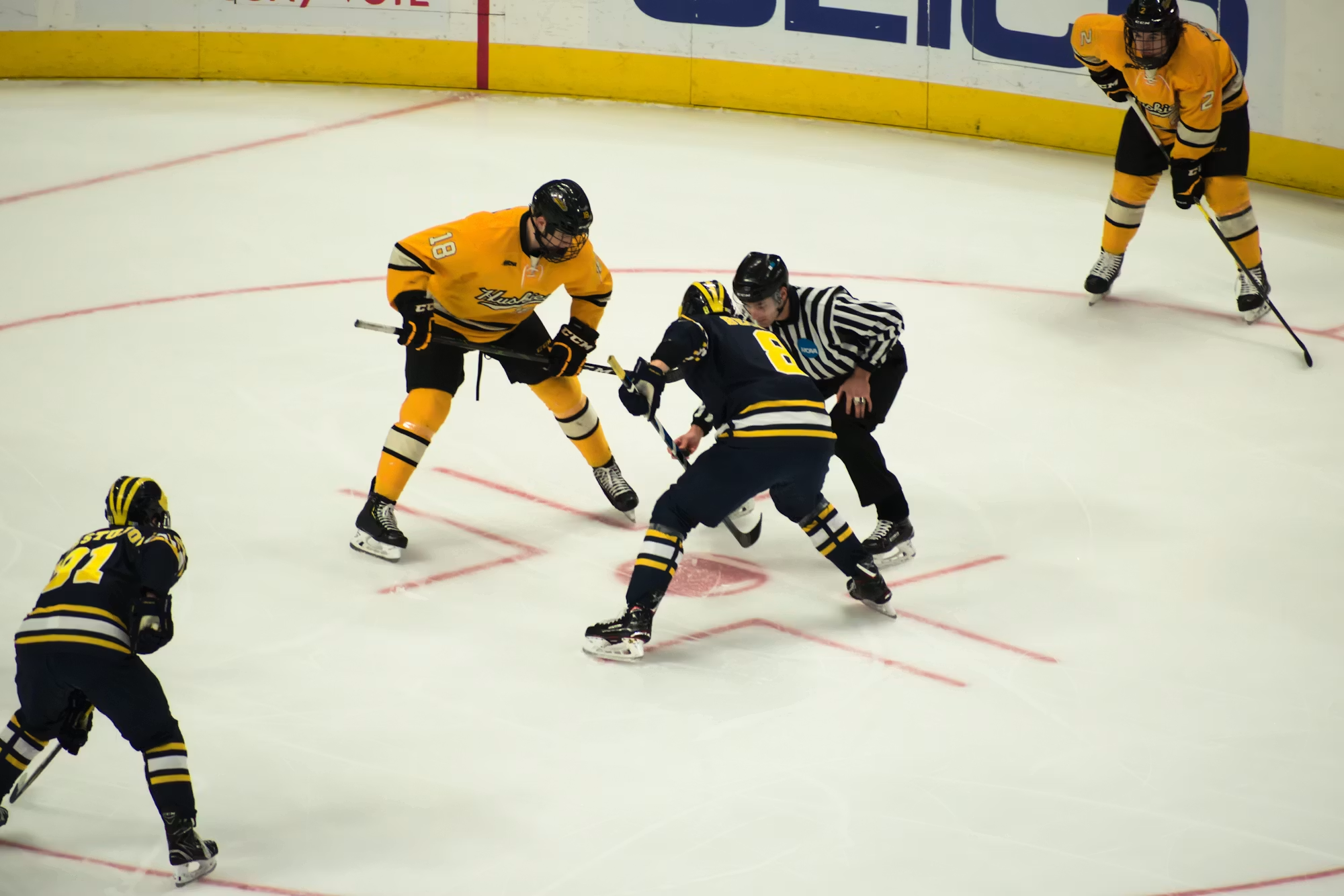
Officials play a crucial role in maintaining the integrity of hockey, ensuring that the game is played fairly and according to the rules. In ice hockey, a game is overseen by two referees and two linesmen. Referees are responsible for enforcing the rules, calling penalties, and ensuring that play is fair. Linesmen assist in monitoring offside and icing calls, both of which are critical for maintaining the pace of the game.
In field hockey, umpires oversee matches, making calls on fouls and free hits. They have the authority to award penalty corners or strokes, significantly impacting the game’s dynamics. The decisions made by officials can influence the outcome of a match, making their understanding of the rules and their ability to apply them fairly vital for the sport’s integrity.
Common Misunderstandings and Clarifications
Despite the widespread popularity of hockey, some rules often lead to confusion among players and spectators. One common misunderstanding in ice hockey involves the offside rule. A player is considered offside if they enter the offensive zone ahead of the puck, which can result in a stoppage of play. This rule is designed to prevent players from gaining an unfair advantage by positioning themselves too close to the opposing goal.
In field hockey, the rule regarding scoring from within the circle can also be misunderstood. Only players from the attacking team can legally strike the ball in the circle to score, highlighting the importance of teamwork and strategy in offensive plays. Clarity on these rules is essential for enhancing both gameplay and spectator enjoyment, as understanding the nuances adds depth to the experience.
The Importance of Understanding the Rules
A thorough understanding of hockey rules enhances the experience for both players and fans. For players, being well-versed in the regulations allows for better decision-making during gameplay, leading to improved performance and teamwork. For fans, knowledge of the rules enriches their engagement with the sport, enabling them to appreciate the strategies employed by their favorite teams and players.
Furthermore, a strong grasp of the rules fosters a culture of respect and sportsmanship within the sport. Players who understand the regulations are more likely to uphold the principles of fair play, creating a positive atmosphere for everyone involved, from competitors to spectators. As hockey continues to grow in popularity, promoting a culture of knowledge and respect for the rules will ensure that the spirit of the game remains vibrant for future generations.
Conclusion
Hockey is a dynamic and exhilarating sport that combines skill, speed, and strategy. Understanding the rules and regulations that govern the game provides a framework for players and fans to fully appreciate its intricacies. By exploring the various aspects of gameplay, scoring, equipment, and penalties, individuals can deepen their appreciation for hockey. As the sport evolves, fostering a culture of knowledge and respect for the rules will ensure that the spirit of the game remains strong, engaging new generations of players and fans. Whether you’re a seasoned player or a newcomer to the sport, embracing the rules is essential for fully enjoying the beauty and excitement of hockey.